
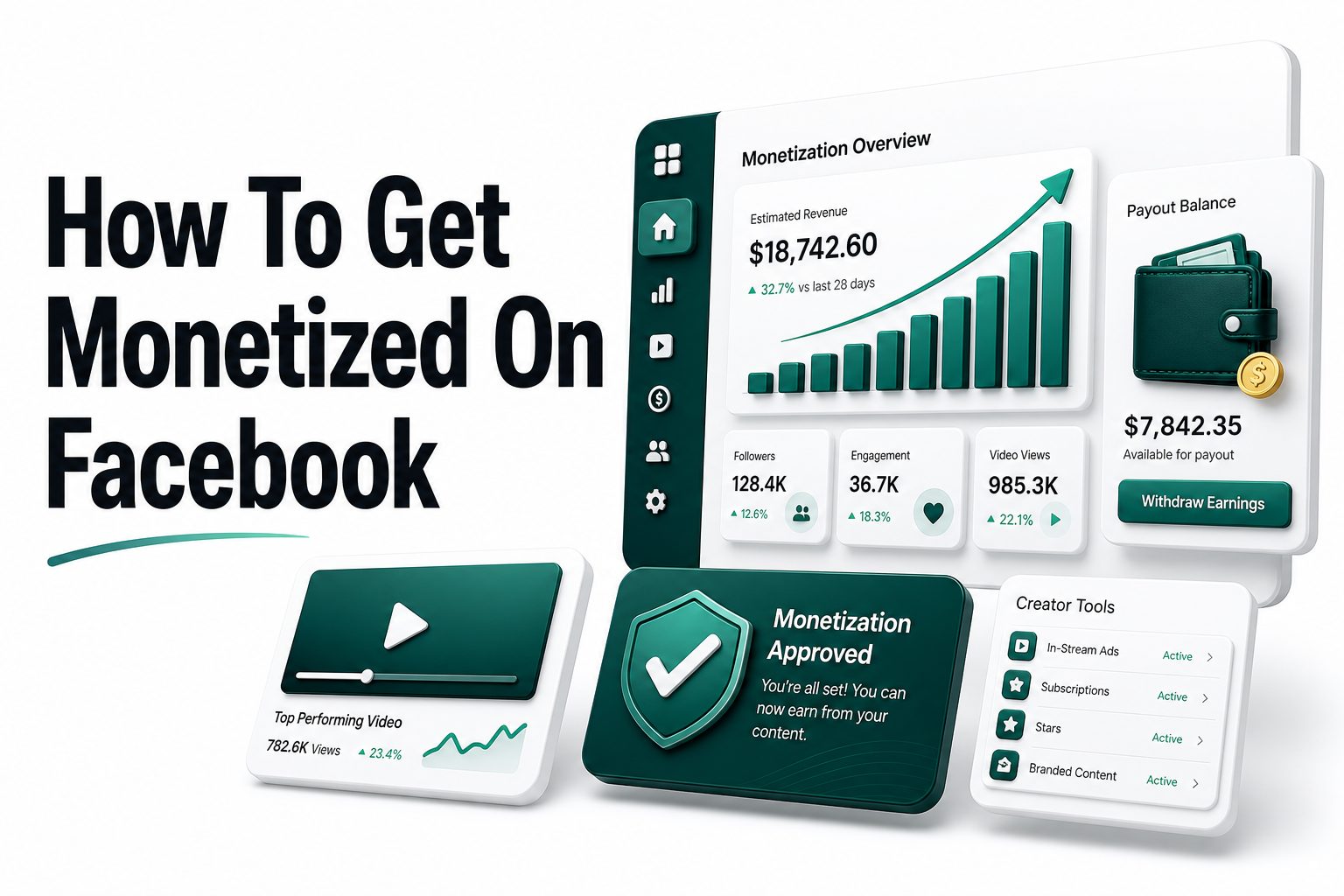
If you want to earn from your content, Facebook can be more than a place to post updates and short videos. The platform now gives creators several ways to make money from Reels, longer videos, photos, text posts, fan support, and subscriptions, depending on eligibility and location.
Learning how to get monetized on facebook starts with more than turning on a feature. You need a professional presence, original content, consistent engagement, and a clean policy record. The creators who earn steadily usually treat Facebook like a media channel, not a random posting app.
This article explains the main monetization options, how eligibility works, what Meta looks for, and how to prepare your page or professional profile for approval. It also covers practical content habits that help you build revenue without chasing shortcuts that can put your account at risk.
Build the Right Facebook Foundation
Before monetization becomes realistic, your Facebook presence needs to look active, trustworthy, and easy to categorize. Use a Page or professional mode profile, complete your bio, choose the right category, add branding, and make sure your content topic is clear to both viewers and Facebook’s systems.
A focused page is easier to monetize than a scattered one. If you post cooking videos one week, finance memes the next, and copied viral clips after that, your audience signals become weak. Pick a content lane and give people a clear reason to follow you.
Know the Main Facebook Monetization Options
Facebook monetization is no longer limited to traditional in-stream ads. Meta has been moving toward broader content monetization, where eligible creators can earn from multiple formats, including Reels, longer videos, Stories, photo posts, and text posts based on performance and qualified views.
Creators may also earn through Stars, fan subscriptions, branded content, affiliate-style partnerships, and external offers promoted through their content. The best revenue plan usually combines platform payouts with audience-owned income, such as products, services, email lists, or paid communities.
Quick Monetization Checklist
- Turn on professional mode or use a Facebook Page.
- Check your Monetization tab in Professional Dashboard or Meta Business Suite.
- Review Partner Monetization Policies and Content Monetization Policies.
- Post original content that you created or meaningfully transformed.
- Avoid reused clips, watermarked videos, engagement bait, and misleading titles.
- Build consistent viewing habits with a clear posting schedule.
- Set up payout details as soon as Meta allows onboarding.
- Track qualified views, watch time, engagement, and earnings rate.
Meet Facebook Partner Monetization Policies
Partner Monetization Policies are the baseline rules for earning money on Facebook. They cover account integrity, authenticity, content behavior, community standards, copyright, and the way you build an audience. A creator can have strong views and still fail if the page looks risky.
This is where many creators get stuck. Buying followers, reposting content, using fake engagement groups, or repeatedly sharing borderline material can damage eligibility. Facebook wants to pay creators who bring real audiences, original value, and advertiser-safe content to the platform.
Create Original Content Facebook Can Reward
Original content matters more than ever. Facebook has stated that content filmed, produced, or meaningfully developed by the creator is more likely to receive distribution and monetization opportunities. Simple reposts, compilations, speed changes, borders, and basic captions usually do not count as strong originality.
If you use third-party material, add real value. That may include expert commentary, clear teaching, analysis, reporting, editing that changes the story, or on-camera presentation that makes the piece your own. Low-effort reaction content is a weak long-term monetization strategy.
Original Versus Risky Content
Content Type | Monetization Potential | Risk Level
Original tutorial video | High | Low
Behind-the-scenes creator post | High | Low
Expert commentary with licensed clips | Medium to high | Medium
Reuploaded viral video | Low | High
Compilation with minor edits | Low | High
Watermarked TikTok repost | Low | High
Misleading headline post | Low | High
Use Professional Dashboard the Right Way
Professional Dashboard is where many creators first see monetization status, content performance, and available tools. On mobile, you can usually check monetization options from your profile or Page dashboard, then review whether your account is eligible, limited, or not yet invited.
Do not treat the dashboard as a one-time approval screen. Check it weekly. Eligibility can change when content is removed, policies update, or your performance shifts. If a warning appears, fix the issue quickly instead of continuing to post around the problem.
Set Up Meta Business Suite for Better Control
Meta Business Suite is useful if you manage a Page, schedule posts, review insights, or work with brands. It gives a more organized view of content, inbox activity, monetization tools, and performance data, especially for creators who publish at scale.
Use it to track which formats bring the strongest reach and engagement. A creator trying to learn [Internal Link: Facebook Content Strategy] should compare Reels, videos, photos, and text posts over several weeks instead of judging content from one viral post.
Focus on Metrics That Affect Earnings
Facebook payouts depend on performance, but not every view has the same value. Meta has introduced metrics such as qualified views, earnings rate, and non-qualified views to help creators see which views may count toward monetization and why some views may not.
Strong monetization usually comes from repeatable engagement. Watch time, retention, shares, comments, and viewer satisfaction all matter. A short Reel with strong completion can outperform a longer post that people abandon quickly. Study the content that keeps viewers watching.
Metrics Worth Tracking
- Qualified views that may be eligible for earnings.
- Average watch time on videos and Reels.
- Retention during the first three seconds.
- Shares per thousand views.
- Comments from real viewers, not engagement pods.
- Follower growth from each content format.
- Earnings rate per thousand qualified views.
- Non-qualified view reasons inside creator tools.
Build a Content Plan Before You Chase Monetization
Many creators ask how to get monetized on facebook before they have a repeatable content plan. That order creates frustration. Monetization works better when your audience already knows what you publish, why it matters, and when to expect more.
Plan content around repeatable formats. For example, a fitness creator might use quick form checks, client transformations, myth-busting posts, and weekly live sessions. A finance creator might use market explainers, budgeting tips, and comment-based Q&A posts with clear disclaimers.
Use Reels Without Depending Only on Reels
Reels can drive fast reach and, according to Meta, have become a major source of creator payouts. They are excellent for discovery, quick teaching, entertainment, and audience growth. Short videos can introduce your page to people who would never search for you.
Still, Reels should not be your only format. Longer videos, Stories, photos, text posts, and lives help deepen the relationship. A balanced creator uses Reels to attract attention, then uses other formats to build trust, context, and repeat engagement.
Improve Watch Time With Stronger Openings
The first few seconds of a video decide whether most viewers stay. Start with the result, tension, mistake, or payoff. Avoid long greetings and slow setups. For example, “Most new sellers price this wrong” is stronger than “Hey everyone, welcome back.”
Keep the middle tight. Cut repeated points, remove dead space, and make each line earn its place. Use captions when helpful, but do not rely on captions to fix weak pacing. Better retention supports reach, which can support monetization.
Make Posts Advertiser-Safe
Advertiser-safe content is important because monetization often involves ads placed near your work. Content with hate, misinformation, graphic material, sexual content, shocking claims, or unsafe advice can become limited even if it gets attention from viewers.
This does not mean every topic must be bland. You can cover serious subjects with careful sourcing, balanced language, and clear context. The goal is to make content useful, accurate, and suitable for a broad audience of viewers and advertisers.
Practical Content Tips
- Open videos with the clearest value in the first sentence.
- Use original footage, voiceover, graphics, or analysis.
- Keep thumbnails honest and easy to read.
- Turn strong comments into follow-up posts.
- Repurpose ideas across formats, not the same file everywhere.
- Avoid copying trends without adding a clear point of view.
- Review older posts that may create policy risk.
- Build series content so viewers return.
Avoid Common Monetization Mistakes
The fastest way to lose monetization is to chase loopholes. Reposting viral clips, using copyrighted music carelessly, buying engagement, or posting sensational claims may create short-term reach, but these tactics often hurt eligibility and trust.
Another mistake is ignoring payout setup. Facebook’s terms require creators to complete onboarding and payment enrollment within the required timeline. If Meta invites you to monetize, complete tax, identity, and banking steps promptly so earnings are not delayed or forfeited.
Use Facebook Stars and Fan Support
Stars allow eligible fans to support creators directly during certain content experiences. This works especially well for live creators, entertainers, educators, gamers, and personalities with loyal communities. Fans are more likely to send support when they feel recognized and involved.
Build Stars into your content naturally. Thank supporters, answer thoughtful comments, and create moments where the audience feels present. Do not beg for support every few minutes. Fan monetization works best when the content already feels worth supporting.
Create Subscription-Worthy Value
Subscriptions can add predictable income when fans want closer access. Good subscription offers include exclusive live sessions, private groups, bonus tutorials, early access, templates, community feedback, or behind-the-scenes content. The offer should feel specific, not vague.
A subscription will not fix a weak content strategy. First, build public trust and a posting rhythm. Then invite your most engaged followers into a paid layer. For more planning ideas, see [Internal Link: Creator Monetization Strategy] and map benefits around audience needs.
Fan Revenue Ideas
- Monthly live workshops.
- Subscriber-only Facebook group access.
- Downloadable templates or checklists.
- Early access to tutorials.
- Behind-the-scenes business updates.
- Member shoutouts during live streams.
- Private Q&A threads.
- Community challenges with feedback.
Work With Brands Without Hurting Trust
Brand deals can become a strong income stream before or after Facebook monetization approval. The key is alignment. Promote products that fit your topic, audience, and personal standards. A loyal audience notices when a sponsorship feels random.
Use Facebook’s branded content tools when required and disclose paid partnerships clearly. Brands care about reach, but they also care about audience quality. A smaller creator with focused engagement can be more valuable than a large page with shallow views.
Protect Your Account and Content Rights
Copyright issues can block monetization quickly. Use music, images, clips, and graphics only when you have the right to use them. Facebook’s built-in music options may have different rules depending on format, region, and monetization status.
Protect your own work too. Keep original files, project exports, scripts, and proof of creation. If another page copies your content, documentation helps you report impersonation or misuse. Original creators need both creative habits and basic rights management.
Account Safety Basics
- Use two-factor authentication.
- Assign Page roles carefully.
- Keep admin access limited.
- Save original project files.
- Read music and clip usage rules before posting.
- Avoid third-party growth tools that request login access.
- Remove old admins who no longer need control.
- Watch for impersonation pages using your name or videos.
Post Consistently Without Burning Out
Consistency helps Facebook learn your audience, but it does not require posting all day. A manageable schedule beats a short burst followed by silence. Start with three to five strong posts per week and increase only when quality stays steady.
Batch production can help. Film several short videos in one session, write captions ahead of time, and schedule posts through Meta Business Suite. Leave room for timely posts, but do not let daily pressure push you into low-quality content.
Turn Audience Feedback Into Better Content
Comments are not just engagement signals. They are research. When viewers ask the same question, challenge a point, or share a problem, they are telling you what to make next. Save those comments and build content around them.
This creates a natural content loop. You post, viewers respond, and their responses shape the next post. Over time, your content becomes more relevant, which can improve retention, shares, and follower loyalty. Those signals support long-term monetization.
Simple Weekly Publishing Plan
Day | Content Focus | Example
Monday | Educational Reel | Three mistakes beginners make
Tuesday | Text or photo post | Personal lesson or quick tip
Wednesday | Short video | Answer a common comment
Thursday | Story | Poll, update, or behind-the-scenes clip
Friday | Longer post | Case study, tutorial, or review
Weekend | Live or community post | Q&A, recap, or audience challenge
Review Eligibility Before Applying or Waiting
Some monetization tools are invite-only, so you may not be able to apply directly for every feature. Still, you can express interest where available and keep your account ready. Check your Monetization tab regularly for new options.
If you are not eligible, study the reason instead of guessing. The issue may be location, age, policy status, follower quality, content type, or invitation availability. Fix what you can control and keep publishing original, compliant content.
Treat Monetization as a Business System
Creators who earn consistently usually think beyond single posts. They track revenue, test topics, manage production time, negotiate brand deals, and study audience behavior. Facebook becomes one part of a broader creator business, not the entire plan.
Create a simple revenue dashboard. Track platform payouts, Stars, subscriptions, affiliate income, sponsorships, product sales, and leads. This helps you see which activities actually pay. More importantly, it keeps you from confusing views with business growth.
Business Habits for Facebook Creators
- Review analytics every week.
- Keep a list of top-performing topics.
- Save sponsor inquiries and rates.
- Track payout dates and tax documents.
- Build an email list or off-platform contact path.
- Create reusable scripts and production templates.
- Set content boundaries for brand partnerships.
- Revisit your monetization strategy every quarter.
Conclusion
Facebook monetization is not a single switch. It is the result of a clean account, original content, steady publishing, engaged viewers, and smart use of the tools Meta makes available. The strongest creators build trust first, then turn that trust into revenue through platform payouts, Stars, subscriptions, brand deals, and owned offers.
Start by checking your Professional Dashboard or Meta Business Suite, then review your policy status and current content library. Remove risky habits, focus on original work, and study the formats that produce qualified views and meaningful engagement. Once your foundation is solid, monetization becomes easier to pursue and easier to maintain.
If your goal is to learn how to get monetized on facebook, the practical path is clear: create valuable content people return for, follow Meta’s rules, complete payout steps quickly, and treat your page like a real creator business.
FAQ
Can new creators get monetized on Facebook?
Yes, but most new creators need to build a track record first. Focus on original posts, consistent engagement, and policy compliance. Some programs are invite-only, so availability may depend on your account, location, and performance.
How many followers are needed for Facebook monetization?
Follower requirements vary by monetization tool and may change over time. Instead of relying on one number, check the Monetization tab in Professional Dashboard or Meta Business Suite for the exact status of your Page or profile.
Does Facebook pay for Reels?
Facebook can pay eligible creators for Reels through its monetization programs when content meets performance and policy requirements. Earnings may depend on qualified views, engagement, originality, region, and whether your account has access to the relevant program.
Why is my Facebook monetization limited?
Monetization may be limited because of policy violations, reused content, copyright issues, low-quality engagement, location limits, or account integrity concerns. Review the dashboard notice carefully, fix the issue, and avoid repeating the behavior.
Can I monetize copied videos on Facebook?
Copied videos are risky and usually perform poorly for monetization. Facebook favors original content or content with meaningful added value. Reuploads, compilations, watermarks, and minor edits can reduce reach or create policy problems.
0 Comments